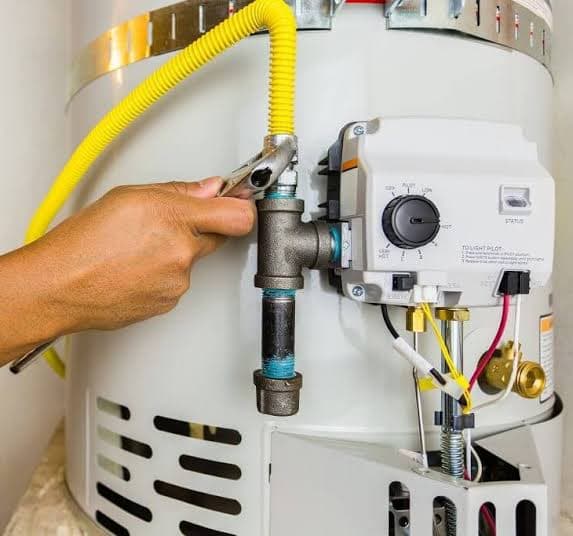
If you're replacing a water heater in California, most homeowners pay somewhere between $600 and $5,600 installed depending on the unit type, plus a required permit fee that typically runs $50 to $300 in most California jurisdictions. Below, we break down typical costs by unit type, what actually drives the price up or down here in Riverside County specifically, and how to tell whether you need a repair or a full replacement.
Get a Same-Day Replacement Quote →Water Heater Replacement Cost by Type
Here's how the three most common water heater replacement options generally compare, based on published national and California cost data. These are general reference ranges, not a quote for your home — exact pricing depends on your specific setup, including existing venting, gas line condition, and any code upgrades needed. We provide a free, written, in-person estimate before any work begins.
| Unit Type | Typical Installed Cost (Unit + Labor) | Typical Permit Fee |
|---|---|---|
| 40-Gallon Tank | $600 – $3,000 | $50 – $300 |
| 50-Gallon Tank | $700 – $3,100 | $50 – $300 |
| Tankless | $1,400 – $5,600 | $50 – $300 (higher if electrical work is required) |
Ranges above reflect published 2026 national and California cost data (Angi, HomeGuide, Fixr, HomeAdvisor) and typical California plumbing permit fee schedules, not a confirmed America's Plumbing price list. Your actual price depends on your home's specific setup — get a free written estimate for the real number.
What Drives Cost in Riverside County
Permits: California Plumbing Code requires a permit for every water heater replacement — even a direct swap of the same size and fuel type. There's no emergency exception, regardless of what you might hear elsewhere. The permit covers the inspection that confirms your new unit is installed to code, which protects you as the homeowner, including at resale.
Seismic strapping: California code also requires earthquake strapping on every water heater — two metal straps, one in the upper third of the tank and one in the lower third, with the lower strap positioned at least four inches above the unit's controls. If your existing water heater doesn't already have code-compliant strapping, that gets added as part of the replacement.
Hard water: Riverside County's water carries more dissolved minerals than many other parts of the state. That accelerates sediment buildup inside a tank, which is one of the most common reasons water heaters here fail earlier than their rated lifespan — and it's worth discussing with your plumber when choosing a replacement unit.
Unit size and code upgrades: A larger household needs more hot water capacity, and sizing up (or down) affects both the unit cost and sometimes the labor involved. Older homes may also need a few code-required additions during replacement — for example, an expansion tank on a closed-loop system, or updated venting — that weren't required when the original unit was installed decades ago.
Tank vs. Tankless — Which Costs More Over Time
Tankless units generally cost more upfront but use less energy and last longer than a traditional tank, so the real comparison depends on how long you plan to stay in your home. Tank units are usually the lower-upfront-cost choice and are still the right call for many households, especially if a fast, straightforward swap matters more than long-term savings. We cover this comparison in full detail — including how Riverside County's hard water affects each type differently — in our tankless vs. tank comparison guide.
See Our Full Tankless vs. Tank Comparison →What a Professional Installation Actually Includes
A proper water heater replacement is more than swapping the tank. It includes disconnecting and safely disposing of the old unit, verifying the gas or electrical connection meets current code, installing code-compliant seismic strapping, adding a pressure relief valve and expansion tank where required, and testing the new unit for leaks and proper hot water delivery before the job is called done.
Pulling the permit and scheduling the inspection is part of this process too — not an optional add-on. A contractor who skips the permit to save you money upfront is passing the risk of an uninspected installation on to you, which can become a real problem if it's ever discovered during a home sale or insurance claim.
Signs You Need a Replacement, Not a Repair
If your water heater is showing rust-colored water, pooling at the base, or is simply past the 8–12 year mark most tank units are designed for, replacement is usually the more sensible path rather than repeatedly repairing an aging unit. We cover the full symptom checklist — and what each sign actually means — in a dedicated guide.
See 9 Signs Your Water Heater Is Failing →Repair or Replace? How to Decide
Not every water heater problem means you need a full replacement. If your unit is relatively young and the issue is a single failed part — a thermostat, heating element, or pilot assembly — a repair is often the more cost-effective choice. Replacement typically makes more sense once a unit is past the 8–12 year mark, especially if you're already seeing multiple issues at once, like rust-colored water alongside inconsistent temperatures.
A good plumber will walk you through both options honestly, including telling you when a cheap repair now is likely just delaying a replacement you'll need again soon. Ask for that comparison in writing before you decide.
See Our Water Heater Repair Service →Converting to Tankless vs. a Like-for-Like Tank Swap
Replacing a tank with the same type of tank is usually the most straightforward job — the existing venting, gas line, and water connections are already sized correctly, so the work is mostly disconnect-and-reconnect plus the required code updates. Converting from a tank to tankless is a bigger scope of work by comparison: tankless units often need a larger gas line to deliver enough BTUs on demand, different venting, and sometimes an upgraded electrical connection for the unit's controls.
None of that makes tankless a bad choice — it just means the upfront job is more involved than a straight swap, which is exactly why an in-person assessment matters more for a conversion than for a like-for-like replacement. A plumber needs to see your existing gas line and venting before quoting a conversion accurately.
How to Get an Accurate Quote
Because so much of the final cost depends on your home's specific setup, the only way to get a truly accurate number is an in-person assessment. During that visit, a plumber should check your existing venting, gas or electrical connections, water pressure, and available space, then give you a written estimate before any work begins — not a verbal ballpark that changes once the job starts.
A trustworthy estimate should also spell out what happens if something unexpected turns up once the old unit is disconnected — for example, discovering the existing gas line or venting does not meet current code. Ask how that scenario is handled before you agree to the job, not after.
Why Same-Day Replacement Matters
A failed water heater doesn't wait for a convenient time, and going days without hot water is more than an inconvenience for most households. We stock the most common tank sizes on our trucks specifically so a straightforward replacement can be completed the same day you call, rather than waiting on a special order. Tankless installations that require a gas line upgrade may take a bit longer, but we'll tell you that upfront during the estimate — not after we've started.
We provide same-day water heater replacement throughout San Jacinto.
See San Jacinto Plumbing Services →We also serve Hemet and the surrounding Riverside County communities with the same same-day standard.
See Hemet Plumbing Services →Frequently Asked Questions
Is a permit required to replace a water heater in California?
Yes. California Plumbing Code requires a permit for every water heater replacement, even a direct swap of the same size and fuel type. There is no exception for doing it quickly or as an emergency.
How much does a 50-gallon water heater cost installed?
Published national and California cost data puts a typical 50-gallon installed cost around $700 to $3,100, plus a permit fee of roughly $50 to $300. That is a general reference range, not a quote — we provide a free, written, in-person estimate before any work begins so you have a real number for your home.
Do I need a permit for a same-day emergency replacement?
Yes — even same-day emergency replacements require a permit under California code. We handle the permit process as part of the job so it does not slow down your installation.
What is seismic strapping and why does my water heater need it?
California code requires two metal straps holding the tank to the wall — one in the upper third, one in the lower third, positioned at least four inches above the controls — to keep the unit secure during an earthquake. It's required on every installation, not just in older homes.
How long does a water heater replacement take?
Most tank replacements are completed in a few hours the same day, since we stock common sizes on our trucks. Tankless installations can take longer if a gas line upgrade is needed.
Should I repair or replace my water heater?
If your unit is under about 8 years old and the issue is a single part, repair is often the better value. Past 10 years, or with multiple issues at once, replacement is usually the smarter long-term choice.
Does a bigger household need a bigger water heater?
Usually, yes. A tank that is undersized for your household will run out of hot water faster and work harder to keep up, which shortens its lifespan. We factor your household size into the sizing recommendation during your estimate.
What happens to my old water heater after replacement?
We disconnect it and haul it away as part of the job, so you do not need to arrange separate disposal.