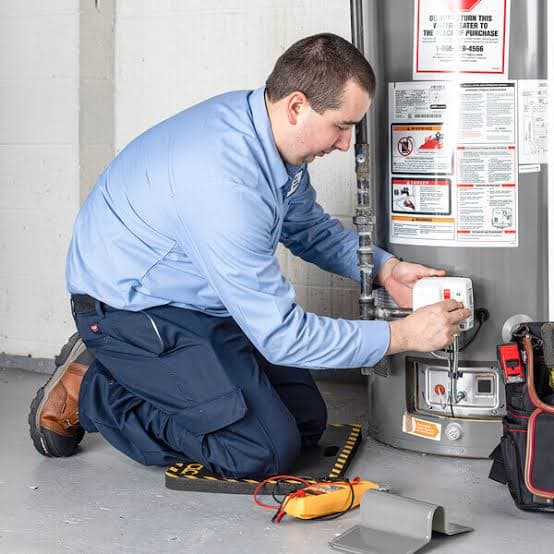
A failing water heater usually gives you warning signs before it fails completely — you just need to know what to look for. Here are nine signs that mean it's time to call a plumber, what each one typically indicates, and how to tell whether you're looking at a quick repair or a full replacement.
Get a Free Diagnosis →9 Signs Your Water Heater Is Failing
- ▸Age over 8–12 years — most tank water heaters are designed to last 8 to 12 years. If yours is in or past that range, any new symptom is more likely to mean it's time to replace rather than repair.
- ▸Rust-colored water — this usually means the tank itself is corroding from the inside, which isn't something a repair can fix.
- ▸Rumbling or popping sounds — hardened sediment at the bottom of the tank, common in Riverside County's hard water, traps water that boils and escapes as noise.
- ▸Water pooling around the base — a sign of a tank leak, which typically means replacement rather than repair.
- ▸Inconsistent water temperature — often a failing thermostat or a dip tube issue, sometimes repairable depending on the cause.
- ▸Not enough hot water for the household anymore — the tank may be undersized for your current usage, or sediment buildup may be reducing its effective capacity.
- ▸A pilot light that won't stay lit (gas units) — often a thermocouple issue, which is usually repairable if caught early.
- ▸A rotten-egg smell near the water heater — this can indicate bacteria in the tank or, in rare cases, a gas leak. Treat any gas smell as an emergency and call immediately.
- ▸Rising energy bills with no other explanation — an aging or sediment-clogged unit loses efficiency over time, so the same tank costs more to run each year.
Why These Signs Show Up Earlier in Riverside County
Several of these signs — especially rumbling noises and reduced hot water capacity — tend to appear earlier here than in areas with softer water. Riverside County's water carries more dissolved minerals, and every time your tank heats water, a small amount of that mineral content settles at the bottom as sediment. Over months and years that layer thickens, insulating the water from the heating element and forcing the unit to work harder just to keep up.
That extra strain is also why energy bills tend to creep up before a tank fully fails — the unit is quietly working overtime long before it stops working altogether.
What to Do When You Notice a Sign
If you're seeing a leak, smelling gas, or the water is coming out visibly rusty, stop using the unit and call for service right away rather than waiting to see if it gets worse. For less urgent signs — a bit more noise than usual, or hot water that runs out a little faster — it's still worth having it looked at soon, since catching a repairable issue early is what keeps it repairable instead of becoming a full replacement.
Try to note when the sign started and whether anything changed around the same time — a recent change in how many people are showering back-to-back, for example, can point to a capacity issue rather than a failing unit. That detail helps a plumber diagnose the actual cause faster once they arrive.
Repair or Replace?
One or two of these signs on their own — especially on a newer unit — often point to a straightforward repair. Several signs at once, or a unit already past the 8–12 year mark, usually means replacement is the more cost-effective path. A same-day assessment is the fastest way to know for sure, and a plumber who's being straight with you will tell you plainly which category you're in rather than defaulting to the bigger job. We break down the full cost picture, by unit type, in our water heater replacement cost guide.
See Our Full Cost Guide →Not sure which category your water heater falls into? A same-day diagnosis will tell you for certain.
See Our Water Heater Repair Service →Frequently Asked Questions
How do I know if my water heater needs to be replaced instead of repaired?
Age is the biggest factor — past 8 to 12 years, a repair often just delays a replacement you will need soon anyway. Multiple symptoms at once (like rust-colored water plus inconsistent temperature) also point toward replacement.
Is rust-colored water always a sign of a failing water heater?
It is one of the most common causes, especially if it only happens with hot water. It usually means the tank is corroding internally, which is not repairable.
Why does my water heater make rumbling noises?
Rumbling is almost always sediment buildup at the bottom of the tank, common in Riverside County's hard water. It does not always mean replacement — flushing the tank can sometimes resolve it if caught early.
What should I do if I smell gas near my water heater?
Treat it as an emergency. Do not light anything or flip a switch — leave the area and call for emergency service immediately.
Can I prevent these signs from happening in the first place?
Annual flushing helps significantly in hard-water areas like ours, since it clears sediment before it builds up enough to cause noise or efficiency loss. It will not make a unit last forever, but it does help it reach its full expected lifespan.
How fast can you get someone out to look at my water heater?
We offer same-day scheduling for water heater diagnosis throughout San Jacinto, Hemet, and the surrounding Riverside County area. Call to check availability for today.