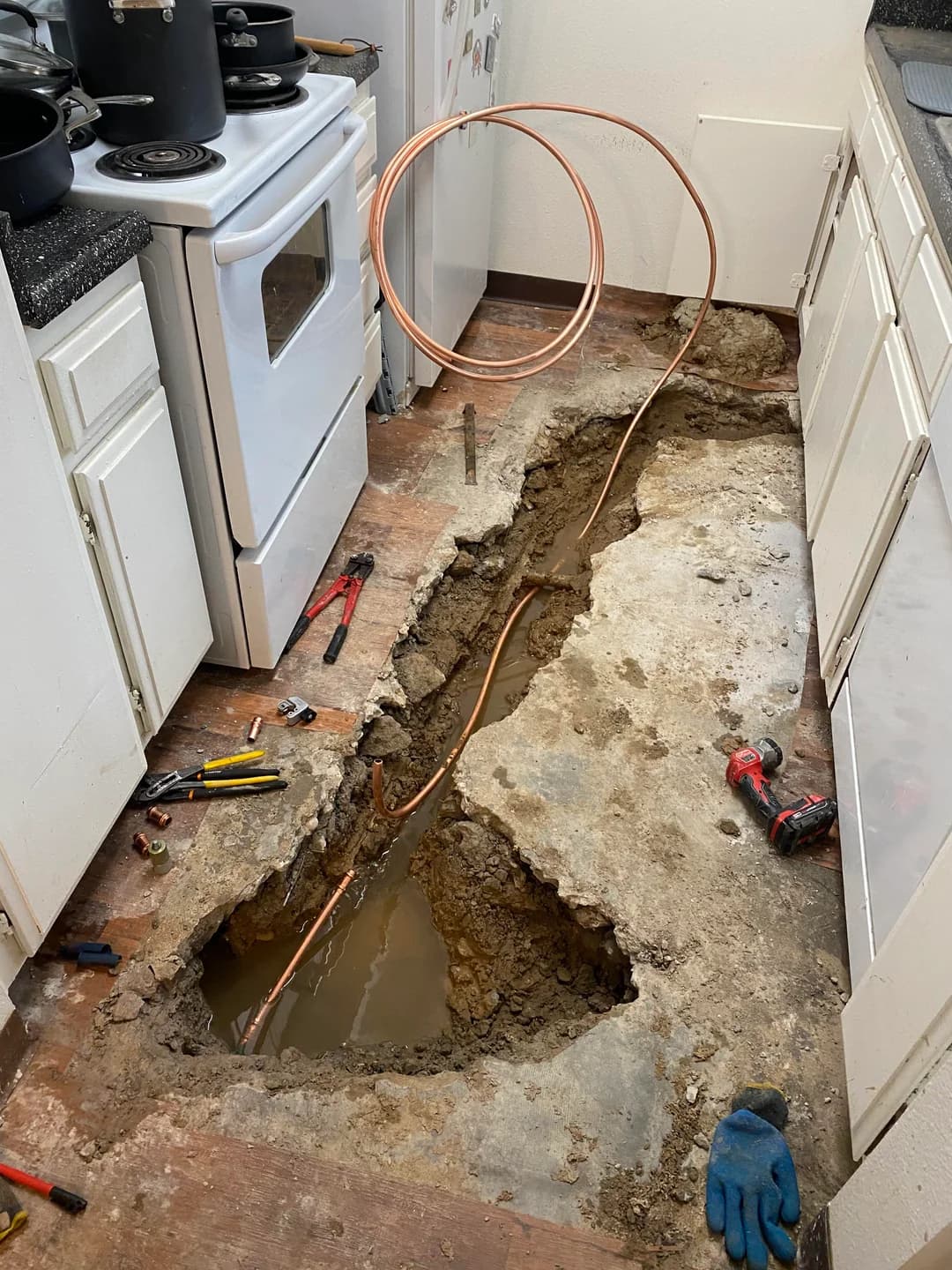
A slab leak is a water leak in the pipes running underneath your home’s concrete foundation. Because it’s hidden, it can run for weeks or months — quietly driving up your water bill and damaging your foundation — before anyone notices.
Older neighborhoods across San Jacinto and Riverside County are especially prone to them: decades of shifting soil, ground movement, and water-pressure changes are hard on the aging copper lines common in homes built from the 1960s through the 1990s. The good news is that slab leaks almost always announce themselves. Here are the seven signs to watch for.
1. An unexplained spike in your water bill
A leak under the slab runs constantly. If your usage habits haven’t changed but your bill jumps noticeably, that water is going somewhere — and a hidden leak is one of the most common explanations.
2. The sound of running water when everything is off
Turn off every faucet and appliance. If you still hear water running or trickling, especially near the floor, it can be water moving through a pipe break beneath the slab.
3. Warm or hot spots on the floor
A leak in a hot-water line under the slab can warm the floor above it. If one area of your tile or flooring is unexpectedly warm underfoot, note exactly where — it helps pinpoint the leak.
4. Cracks in flooring or walls
As water erodes the soil under the foundation, the slab can shift. That movement shows up as new cracks in floor tile, drywall, or around door frames that don’t close the way they used to.
5. Low water pressure
If water is escaping through a break in the line, less of it reaches your fixtures. A sudden, unexplained drop in pressure throughout the house can point to a leak under the slab.
6. Damp, warped, or discolored flooring
Water wicking up through the slab can warp wood floors, loosen tile, or leave damp patches and discoloration on carpet — often with no spill to explain it.
7. A musty smell or mold
Constant moisture under the foundation creates the perfect conditions for mold and mildew. A persistent musty odor — especially near the floor or in lower levels — is a red flag worth investigating.
See our leak detection service →What to do if you suspect a slab leak
Don’t wait. The longer a slab leak runs, the more it costs — both on your water bill and in foundation and flooring damage. Professional leak detection uses non-invasive electronic and acoustic equipment to locate the leak precisely, so the repair is targeted instead of tearing up your whole floor.
Depending on the location and the condition of the pipe, the fix might be a spot repair, a re-route of that line, or — if the plumbing is old and failing in multiple places — whole-home repiping. We’ll find it first, then walk you through the options honestly.
Learn about whole-home repiping →Frequently Asked Questions
How serious is a slab leak?
Serious enough to act on quickly. Left alone, it wastes water continuously and can undermine your foundation and ruin flooring. Caught early, it’s usually a targeted repair — which is why recognizing the warning signs matters.
Can you find a slab leak without breaking the floor?
Yes. We use non-invasive electronic leak detection and acoustic listening equipment to pinpoint the leak’s location first, so any repair is precise rather than exploratory.
Why are slab leaks common in San Jacinto and Riverside County?
Shifting soil, ground movement, and decades of pressure changes stress the aging copper lines in homes built from the 1960s through the 1990s — which describes a large share of housing across the area.