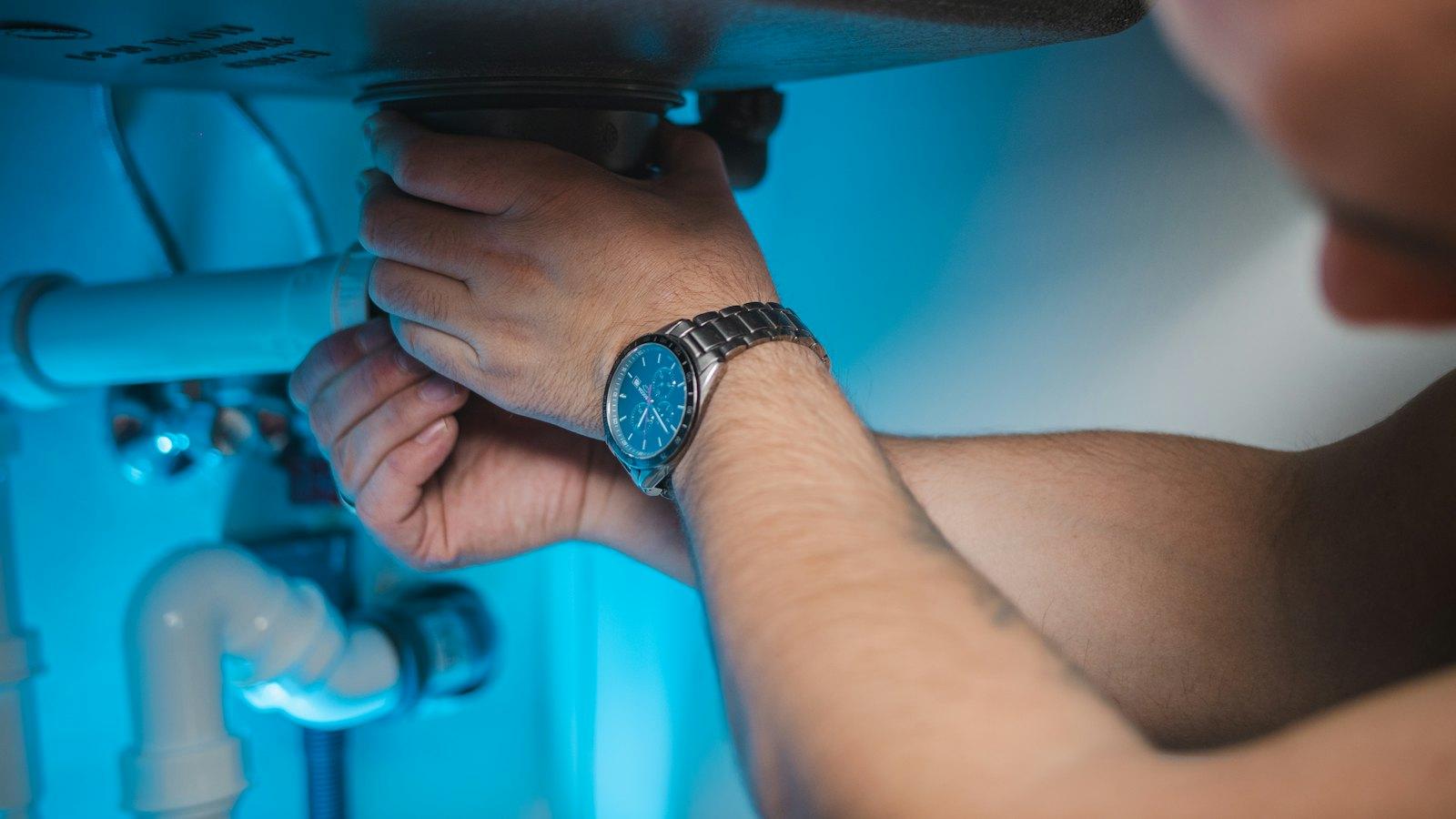
Finding water under the kitchen sink is frustrating — especially because that cabinet is usually crammed with cleaning supplies and the particleboard floor swells the moment it gets wet.
The good news: kitchen sink leaks almost always come from one of a handful of places, and you can usually find the culprit in a few minutes. Here’s how.
First: find exactly where it’s dripping
- ▸Empty the cabinet and wipe every pipe, hose, and fitting completely dry
- ▸Lay a dry paper towel on the cabinet floor
- ▸Run the faucet for a minute, then fill the sink and pull the plug — watch which joint gets wet first
- ▸Then run the disposal and the dishwasher separately, checking again after each
- ▸If it’s wet even when nothing is running, the leak is on the pressurized supply side
The 6 most common causes
1. Loose or worn drain slip nuts
The plastic or metal nuts on the P-trap and tailpiece loosen over time. If the leak only appears when water drains, this is the most likely cause. Hand-tighten first; if it still drips, the washer inside is worn and needs replacement.
2. A failing faucet supply line
The braided lines between the shut-off valves and faucet are under constant pressure. Hard water and age can corrode the crimped ends. A supply line that’s bulging, rusty, or damp should be replaced right away — when these fail, they fail fast.
3. A worn shut-off valve (angle stop)
Water seeping around the valve stem or handle means the packing has worn out. These valves are cheap to replace, and a worn one may not close when you actually need it.
4. The garbage disposal
Leaks at the top usually mean a loose sink flange or failed plumber’s putty. Leaks from the side point to the dishwasher or drain connection. A leak from the bottom of the unit generally means the internal seals have failed — at that point, replacement is the fix.
Garbage disposal repair & replacement →5. The dishwasher drain hose
If the leak only appears during a dishwasher cycle, check the drain hose clamp at the disposal or sink tailpiece, and look for cracks along the hose.
6. The faucet itself or the sink basket strainer
Water running down from the faucet base points to worn O-rings or cartridge. A leak right under the drain opening is usually a failed basket strainer seal.
When to call a plumber
- ▸The leak is coming from inside the wall behind the sink
- ▸The cabinet floor is soft, swollen, or smells musty — there may be hidden water damage
- ▸A shut-off valve won’t close or is corroded
- ▸You’ve tightened everything and it still drips
- ▸Your drain line clogs or backs up as well as leaks
Frequently Asked Questions
Why is there water under my kitchen sink but no visible leak?
Slow leaks often only show up under pressure or during draining. Dry everything, run the faucet, disposal, and dishwasher one at a time, and watch for the first wet spot. If it’s still dry everywhere, the water may be coming from inside the wall — that needs professional leak detection.
Is a leaking garbage disposal worth repairing?
Leaks at the top or side connections are usually simple fixes. A leak from the bottom of the unit means internal seals have failed, and replacement is typically the better value.
How often should faucet supply lines be replaced?
Inspect them yearly and replace any that are bulging, corroded, or damp. In hard-water areas like San Jacinto, the crimped ends can corrode sooner, so many homeowners replace them as preventive maintenance.